Experienced hot tub owners know that when you take care of your water, everything else falls into place.
Fresh, crystal-clear water is an invitation to step in, sit back, and let the massaging jets melt away the stress of the day. For many hot tubbers, a salt system makes that experience even better. The water feels softer, is gentler on your skin and eyes, and doesn't carry the harsh odor often associated with traditional water care.
When your water is properly maintained, it does more than look and feel good. It protects your spa, supports reliable performance, and makes it easier to stick to a consistent wellness routine.
Salt water systems are designed to simplify water care and reduce the need for added chemicals. But they aren't completely hands-off. They require a little attention to keep everything performing the way it should.
In this guide, we'll share how to maintain a salt water hot tub, troubleshoot common water issues, and understand how salt water hot tub chemicals work together to keep your water clear, comfortable, and easy to manage.
How a Salt Water Hot Tub System Works
A salt water system uses a cartridge or cell to convert dissolved salt into chlorine, creating what your spa needs to stay clean.
Instead of adding chlorine manually, the system continuously generates it from the salt added to your water, helping maintain consistent water quality with less hands-on effort.
While the system does a lot of the work for you, it doesn't eliminate water care entirely. Regular testing is still important to keep your spa water balanced.
With a quality salt system, like the Hot Spring® Spas FreshWater® Salt System, maintenance is simpler, focusing mainly on monitoring and testing your water and making small adjustments as needed.
Weekly Salt Water Hot Tub Maintenance
A few minutes of water care each week can help keep your hot tub clear, comfortable, and ready to use.
Test and balance the water once or twice a week. Use test strips to make sure that key measurements are within the recommended levels: chlorine (1–5 ppm), pH (7.2–7.8), and total alkalinity (80–120 ppm). Adjust as necessary.
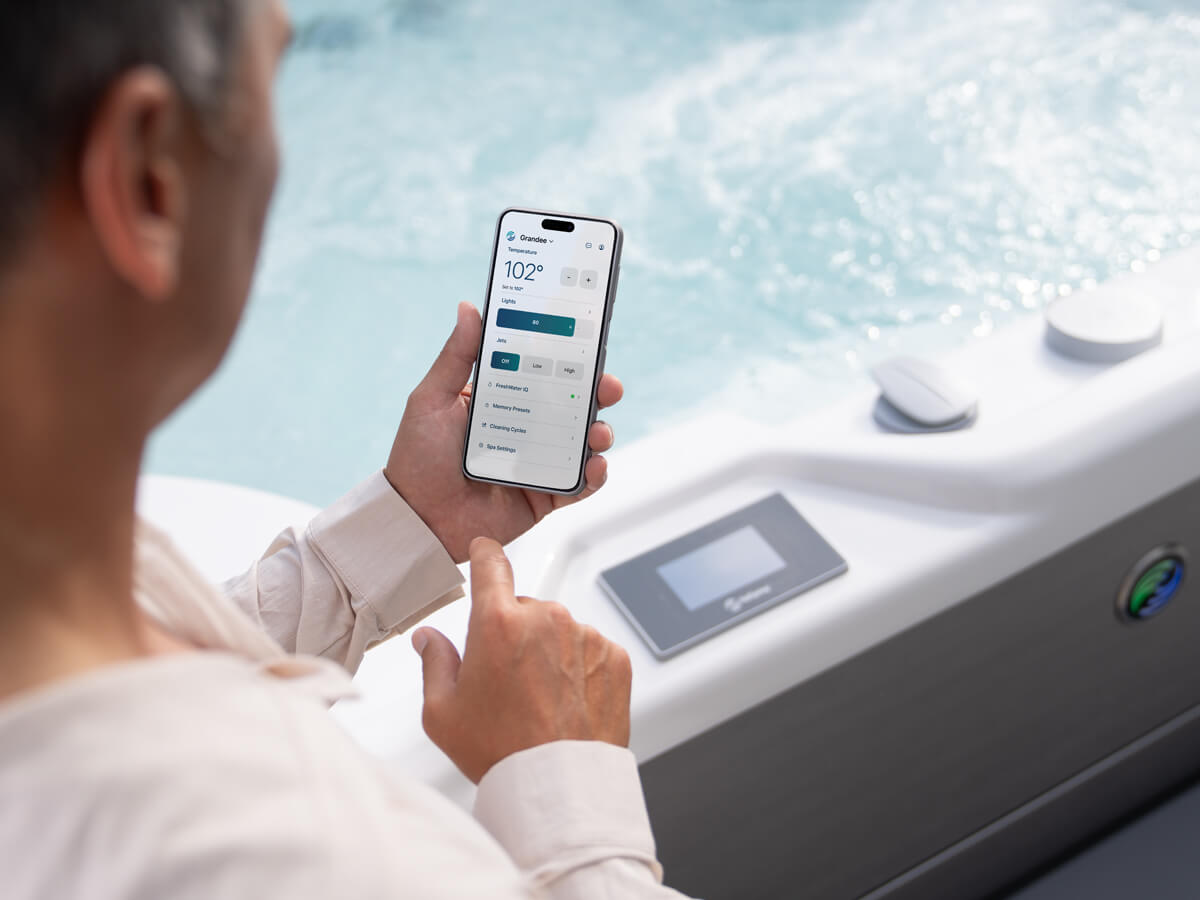
Some systems take it a step further with a monitoring system, which tests the water and lets you know when attention is needed. Hot Spring Highlife® and Limelight® Collection models offer this technology as part of their Freshwater IQ Smart Monitoring System to help take even more of the guesswork out of water maintenance.
Monthly and Seasonal Salt Water Hot Tub Maintenance
In addition to your simple weekly routine, a little extra attention each month and when the seasons change will help protect your spa and keep your water looking and feeling its best.
- Deep clean your filters. Use a filter cleaner solution to remove buildup and maintain optimal performance.
- Inspect the salt system. Check the salt cartridge for wear and replace it according to manufacturer recommendations.
- Confirm calcium hardness levels. Keeping levels within the proper range helps prevent scaling and protects your spa's components.
- Check for visible buildup. Look for scale buildup on the shell or around jets and address it early to avoid more stubborn deposits.
Draining and Refilling
Even with consistent care, every spa benefits from a fresh start.
- The frequency of draining and refilling your hot tub will depend on your salt system. With the FreshWater Salt System and proper maintenance, you can go up to 12 months* without a drain and refill. Other systems may require more frequent drains and refills.
- Clean the interior shell thoroughly before refilling. This helps remove any residual buildup and sets the stage for balanced water.
- After refilling, rebalance your water before use. Test your water to ensure it's properly balanced before your next soak.
- Test calcium hardness levels and treat accordingly. If you live in an area that has hard water, when you refill your spa, the calcium levels may be higher than they should be. If needed, use a product like the FreshWater Vanishing Act calcium pillow or Vanishing Act XL to lower calcium hardness.
Balancing Water Chemistry in a Salt Water Hot Tub
Clear, sanitary spa water is all about balance. Once you understand the basics, it's easy to stay on top of:
- pH: Your pH level should stay between 7.2 and 7.8. When pH is too low, water can become acidic and irritate your skin and eyes. Higher levels can lead to cloudy water and scaling. Keeping it in the correct range helps your water feel soft and gentle and allows your system to run efficiently.
- Total alkalinity: Think of alkalinity as what keeps your pH at a steady level. When it's in the recommended range of 80–120 ppm, it helps support a consistent balance so you're not constantly adjusting.
- Calcium hardness: The right calcium level helps prevent scaling and corrosion. Too much calcium can leave behind buildup on surfaces and jets, while too little can cause water to pull minerals from your spa's components over time.
- Sanitizer output: Your salt system generates chlorine on demand, but it still needs occasional fine-tuning. Based on how many people are using the spa and how often, you may need to increase your sanitizer output slightly. During periods when your spa is used less, you can reduce the output to maintain balance without overworking the system.
Common Salt Water Hot Tub Problems (and How to Fix Them)
Even when you stick to your water care routine, things can occasionally get out of balance. The key is knowing how to troubleshoot when something seems off. You'll find that most issues are easy to identify and even easier to fix once you understand what to look for. While the FreshWater Salt System requires less maintenance than traditional water care, these common problems can happen on any hot tub if not properly maintained.
Cloudy Water
Cloudy water is a common water care issue, and it's usually easy to correct.
- Check your water balance. Cloudiness often points to pH or alkalinity drifting out of range. Test your water right away and adjust as needed.
- Clean your filters thoroughly. Dirty or clogged filters can't do their job effectively, leading to dull, hazy water.
- Boost sanitizer levels temporarily. Increasing output for a short period can help clear contaminants and restore clarity.
Strong Chlorine Smell
If your water has a harsh chemical odor, it's usually a sign that your sanitizer levels are out of balance. These tips will help you maintain balanced chlorine levels and enjoy clear, fresh-smelling water:
- Understand what you're smelling. That odor usually comes from combined chlorine (used-up sanitizer), not clean water.
- Shock the water. Follow your system's guidelines to break down contaminants and refresh your sanitizer.
- Check circulation. Make sure water is moving properly so the sanitizer can do its job.
Scale or Mineral Buildup
White or chalky residue around your shell or jets is a sign that minerals are out of balance.
- Test calcium hardness levels. High calcium can lead to scaling, while low levels can cause long-term wear.
- Be mindful of metals. Your source water (the water that comes through your hose) may contain iron or copper, which can cause staining or discoloration if not managed properly.
- Clean affected areas promptly. Use an approved, non-abrasive cleaner to remove buildup early before it becomes more difficult to remove.
- Maintain consistent balance. Keeping your water chemistry in range is the best way to prevent scale from returning.
Tips to Extend the Life of Your Salt Water System
When it comes to your salt system, a little proactive care goes a long way. When you notice and address small issues early, your system will perform better and last longer.
- Replace cartridges on schedule. Replacing your cartridges regularly keeps your spa water clean and sanitary and reduces strain on the system.
- Keep your cover clean and sealed. A well-fitted spa cover prevents debris from entering the water and minimizes water evaporation, helping maintain proper chemical balance.
- Maintain consistent water levels. Water that's too low can impact circulation and put unnecessary stress on your pumps.
- Adjust for usage. If you're soaking more often, or if many people are using the hot tub, make sure to increase sanitizer output to keep up with demand.
A consistent water care routine supports consistently clean, comfortable water and is one of the simplest ways to improve the longevity of your hot tub and protect your investment.

Why Proper Salt Water Hot Tub Maintenance Matters
When your water is consistently clean and easy to care for, you're more likely to use your spa regularly. That's where the real benefits begin.
Clean, comfortable water invites you in more often. And the more you use your hot tub, the more you'll feel the difference, from relaxation and muscle relief to better sleep, improved recovery, and enhanced vitality. Over time, your hot tub becomes an essential part of your wellness routine.
Proper maintenance also helps protect your investment. Consistent care keeps your water clear and clean, protects your hot tub components, and helps your salt water system operate efficiently for years to come.
Sticking to a regular maintenance routine can help prevent unnecessary wear and damage. Staying consistent now helps you avoid costly repairs later.
Choosing the Right Salt Water Hot Tub for Easier Maintenance
Not all salt water systems are created equal.
If not using the FreshWater Salt System, other systems may require more hands-on management to achieve the same results.
If ease of maintenance matters to you, it's worth choosing a spa designed with reliability, performance, and ease of use in mind. The Hot Spring® Highlife® and Limelight® Collections are designed with advanced features that help take the guesswork out of water care so you can focus on enjoying your hot tub.
You can explore a range of premium salt water hot tubs online or take the next step and visit your local dealer to experience them for yourself.
*Many factors affect the life of spa water, such as bather load and water chemistry. When these factors are accounted for and the spa is properly maintained, the FreshWater IQ Salt System will keep water clean and clear for up to a full year.